

FAQs for the Annapurna Base Camp Trek
13th Jun, 2026
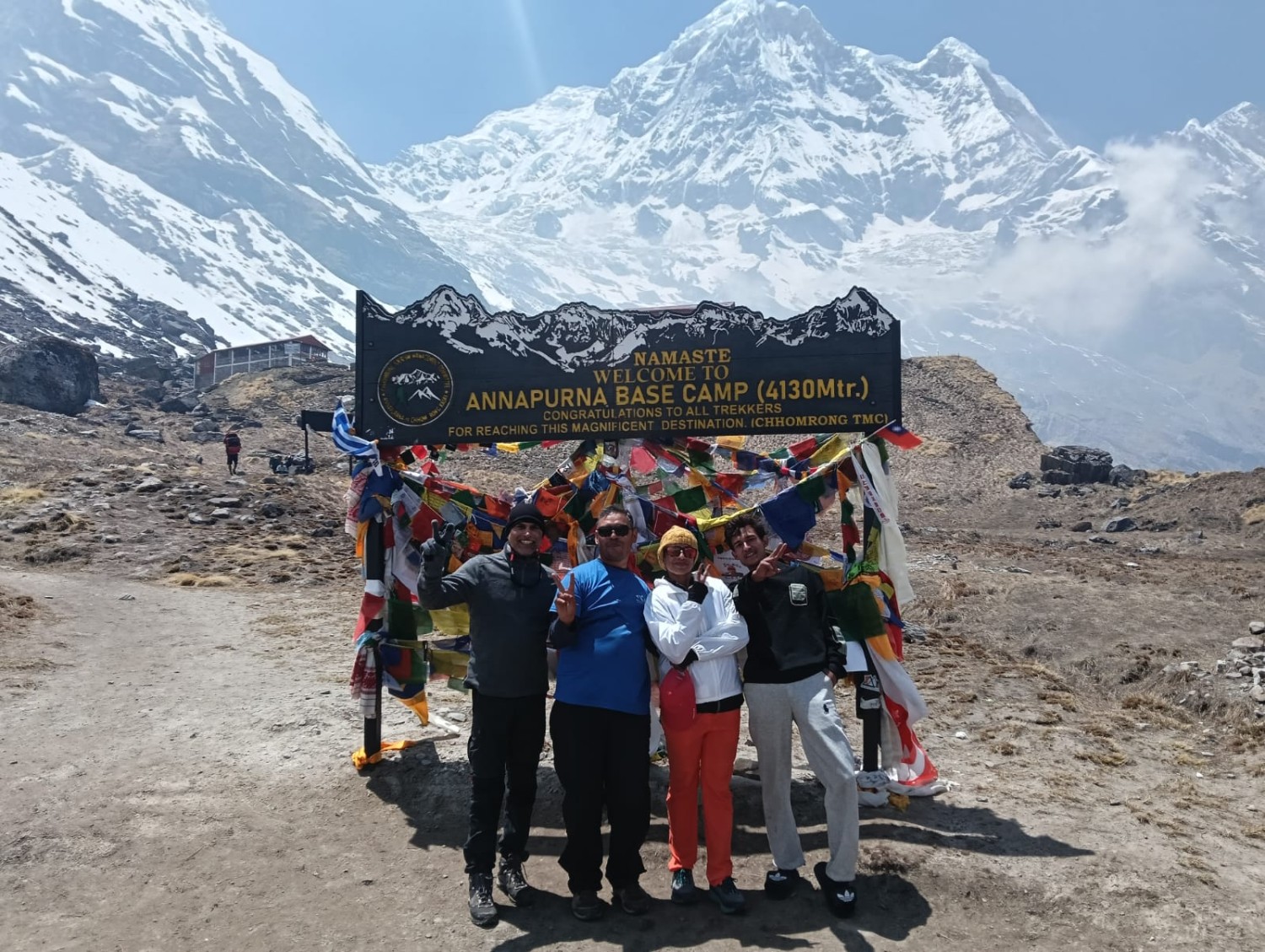
For planning the Annapurna Base Camp Trek, these frequently asked questions (FAQs) provide valuable information and advice for both first-time and experienced trekkers. By consulting this resource, you can prepare thoroughly, avoid common mistakes, and fully enjoy the breathtaking Himalayan views and the once-in-a-lifetime experience of reaching Annapurna Base Camp.
Table of Contents
The Annapurna Base Camp Trek is one of the most popular trekking routes in the Annapurna Region. Before planning this trek, many trekkers have questions regarding budget, itinerary, logistics, safety, difficulty, and preparation. This comprehensive FAQ guide answers the most common questions to help you plan your trek efficiently and with confidence.
General information about Annapurna Base Camp Trek
Why Choose the Annapurna Base Camp Trek?
The Annapurna Base Camp Trek is one of the most popular trekking adventures in Nepal, attracting travelers from around the world. It is suitable for both beginners and experienced trekkers and offers a well-established and accessible trekking route that can typically be completed in 7 to 11 days.
The journey usually begins from Pokhara and takes trekkers through picturesque Gurung and Magar villages, terraced farmlands, and beautiful forests while offering breathtaking views of the Himalayan Mountains. Along the trail, trekkers can experience the authentic lifestyle of the mountain and hill communities, observe diverse wildlife, and enjoy numerous waterfalls and natural attractions.
Since the trekking route passes through the Annapurna Conservation Area, trekkers have the opportunity to explore rich biodiversity, lush forests, and spectacular mountain scenery. The region is home to a variety of plants, birds, and wildlife, making the trek both culturally and environmentally rewarding.
A major highlight of the trek is the visit to Poon Hill and Annapurna Base Camp. Poon Hill is famous for its stunning sunrise views over the Annapurna and Dhaulagiri mountain ranges, while Annapurna Base Camp offers a unique opportunity to stand in the heart of the Himalayas, surrounded by towering snow-capped peaks.
With its combination of breathtaking landscapes, rich cultural experiences, diverse natural beauty, and unforgettable mountain views, the Annapurna Base Camp Trek creates memories that last a lifetime and remains a dream destination for adventure seekers worldwide.
When Is the Best Time for the Annapurna Base Camp Trek?
The best time for the Annapurna Base Camp Trek is during the spring (March to May) and autumn (September to November) seasons. These are the most popular trekking periods, offering stable weather, clear skies, and excellent visibility of the Himalayan peaks.
In addition to favorable trekking conditions, these seasons coincide with some of Nepal's most important festivals, including Dashain, Tihar, and Holi. Trekking during these periods provides a unique opportunity to experience local traditions, celebrations, and the vibrant culture of the mountain communities.
During the spring season, the trekking trails are beautifully decorated with blooming rhododendron forests, Nepal's national flower. The colorful landscapes, combined with snow-capped mountain views, create spectacular scenery throughout the journey.
The pleasant temperatures and generally dry weather make these seasons ideal for trekking, photography, and other outdoor activities. During these months, trekkers can fully appreciate the region's stunning natural beauty, rich local culture and lifestyle, and breathtaking Himalayan panoramas.
For these reasons, spring and autumn are widely regarded as the best seasons to experience the Annapurna Base Camp Trek and create unforgettable memories in the heart of the Himalayas.
How Does the Annapurna Base Camp Trek Start?
The Annapurna Base Camp Trek typically begins with a scenic drive from Kathmandu to Pokhara, followed by a drive from Pokhara to Birethanti, where the trekking journey officially starts.
At Birethanti, trekkers pass through the permit checkpoint, where trekking permits are checked before entering the Annapurna Conservation Area. From there, the trail follows a spectacular route through the beautiful Gurung villages of Hile, Ulleri, Ghorepani, Tadapani, and Chhomrong.
The trek then continues toward Annapurna Base Camp through Sinuwa, Bamboo, Dovan, Himalaya, Deurali, and Machhapuchhre Base Camp before finally reaching Annapurna Base Camp.
Along the way, trekkers enjoy breathtaking mountain views, lush forests, diverse wildlife, beautiful waterfalls, and numerous suspension bridges. The trek also offers rich cultural experiences and unforgettable Himalayan landscapes, making it one of the most rewarding trekking adventures in Nepal.
How Long Does the Annapurna Base Camp Trek Take?
The classic Annapurna Base Camp Trek typically takes 11 days for the round trip from Kathmandu to Kathmandu, including the bus journey to and from Pokhara. This itinerary also includes two nights in Pokhara.
In total, you should plan for approximately 14 days in Nepal, including your arrival and departure days in Kathmandu.
However, it is highly recommended to allow a couple of extra buffer days in Kathmandu, especially if you have international flights or a tight travel schedule. These additional days provide greater flexibility and help ensure a smoother and more enjoyable trekking experience in the Annapurna Region.
Can I Shorten the Annapurna Base Camp Trek Itinerary?
Yes, it is possible to shorten the Annapurna Base Camp Trek itinerary. However, the starting and ending points of the shorter trek are different from those of the classic Annapurna Base Camp Trek.
The classic Annapurna Base Camp Trek typically starts and ends at Birethanti, following a longer route through several traditional villages. In contrast, the shorter Annapurna Base Camp Trek usually starts and ends at Jhinu Danda. To reach the trailhead and return afterward, transportation by vehicle is required.
If you have limited time but still want to experience the beauty of Annapurna Base Camp, the 7-day Short Annapurna Base Camp Trek is an excellent option. It allows you to reach Annapurna Base Camp while reducing the overall trekking duration, making it ideal for trekkers with a tight schedule.
Can I Extend My Annapurna Base Camp Trek to Other Areas in the Annapurna Region?
Yes, you can extend your Annapurna Base Camp Trek at an additional cost if you have extra time and would like to continue exploring the Annapurna Region. There are several exciting options that can be added to your itinerary for a more rewarding trekking experience.
Popular extensions include the Landruk to Dhampus Trek and the Mardi Himal Trek via Landruk. These routes offer spectacular mountain views, beautiful forests, diverse wildlife, vibrant rhododendron flowers, and opportunities to experience the unique culture, traditions, and lifestyles of the local communities.
By extending your trek, you can enjoy even more of the Annapurna Region's natural beauty and gain a deeper appreciation of its rich cultural and Himalayan heritage.
How Many Hours Do You Need to Walk Each Day on the Annapurna Base Camp Trek?
During the Annapurna Base Camp Trek, trekkers typically walk 5 to 8 hours per day, depending on the itinerary, trail conditions, altitude, and individual pace. While ascending, the daily walking distance is generally between 10 and 12 kilometers, allowing sufficient time for acclimatization, rest, and enjoying the beautiful scenery along the route.
After reaching and visiting Annapurna Base Camp, trekkers usually cover longer distances on the return journey. During the descent, it is common to walk 15 to 20 kilometers per day, as descending is generally faster and requires fewer acclimatization stops.
The itinerary is designed to balance gradual altitude gain with comfortable daily walking distances, helping to ensure a safe, enjoyable, and rewarding trekking experience in the Annapurna Region.
How Difficult Is the Annapurna Base Camp Trek?
The Annapurna Base Camp Trek is generally considered an easy to moderately challenging trek. Compared to higher-altitude treks such as the Everest Base Camp Trek and the Annapurna Circuit Trek, it is less demanding in terms of altitude. The trek begins at an elevation of approximately 1,100 meters and gradually ascends to Annapurna Base Camp (4,130 meters).
This trek is suitable for both beginners and experienced trekkers. However, participants should be in good health, have a reasonable level of fitness, and be able to walk for 5 to 8 hours per day. Some sections of the trail are steep, rocky, and uneven, particularly in the forested areas, which can make walking more challenging.
Our experienced guides carefully manage the pace of the trek, accommodation arrangements, rest stops, and acclimatization. They encourage a slow and steady walking pace with regular breaks to help trekkers adjust to the altitude and complete the journey safely and comfortably.
With proper preparation, a positive attitude, and the support of our professional team, the Annapurna Base Camp Trek is an enjoyable and rewarding adventure for trekkers of all experience levels.
What Fitness Level Is Required for the Annapurna Base Camp Trek?
The Annapurna Base Camp Trek requires a basic to moderate level of physical fitness, as trekkers need to walk 5 to 8 hours per day over varied terrain involving both ascents and descents. While technical climbing skills are not required, good endurance and stamina are essential for enjoying the trek and completing it comfortably.
To prepare for the trek, it is recommended to engage in regular physical activities such as walking, day hiking, running, cycling, jogging, or swimming for at least two months before the trek. These activities help improve cardiovascular fitness, strength, and overall endurance.
With proper preparation, a positive attitude, and a steady trekking pace, most healthy individuals and beginners can successfully complete the Annapurna Base Camp Trek without significant difficulty.
Is the Annapurna Base Camp Trek Suitable for Beginners?
Yes, the Annapurna Base Camp Trek is suitable for beginners because the trekking route does not reach extremely high elevations like the Everest Base Camp Trek. The trail remains green and scenic up to Machhapuchhre Base Camp, which helps reduce the risk of altitude sickness compared to higher-altitude treks.
Good preparation includes regular walking or training hikes, hiring an experienced guide, using a strong and reliable porter, and packing appropriate trekking gear for cold weather. With proper support and preparation, beginners can successfully complete the trek and enjoy the journey safely.
Is It Possible to Do the Annapurna Base Camp Trek Solo?
Yes, it is possible to do the Annapurna Base Camp Trek independently; however, it is important to have prior high-altitude trekking experience, good navigation skills, and a strong level of fitness, as you will need to walk 5 to 8 hours per day while carrying your own backpack. A guide is not mandatory for the Annapurna Base Camp Trek for experienced trekkers.
We advise all trekkers that hiring a guide is highly recommended, especially for solo trekkers. A guide can ensure safety, assist with logistics, manage permits, and help you navigate the trail smoothly, making the overall Annapurna Base Camp Trek more comfortable and secure.
What Is the Highest Altitude During the Annapurna Base Camp Trek?
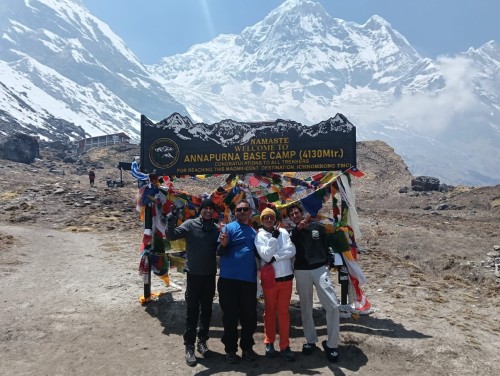
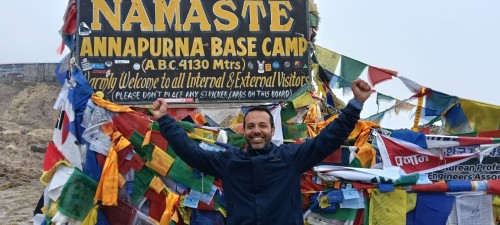
The highest altitude during the Annapurna Base Camp Trek is 4,130 meters (18,192 feet) at Annapurna Base Camp. It is located among the surrounding mountains and offers breathtaking panoramic views of Mount Annapurna and the surrounding Himalayan peaks, making it one of the most memorable highlights of the trek.
What Permits Are Required for the Annapurna Base Camp Trek?
The required permits for the Annapurna Base Camp Trek include the Trekkers’ Information Management System (TIMS) card and the Annapurna Conservation Area Project (ACAP) entry permit. Without these permits, trekking in the region is not allowed. If you purchase them on the way, you may need to pay double the cost.
However, all necessary permits are included in our trekking package, and our guide will arrange them on your behalf to ensure a smooth and hassle-free trekking experience.
Where Can I Get the Permits for the Annapurna Base Camp Trek?
The required permits for the Annapurna Base Camp Trek can be obtained from the Nepal Tourism Board office at Bhrikutimandap in Kathmandu or from the Nepal Tourism Board office in Lakeside, Pokhara. However, if you book your trek with High Pass Adventure, we will handle all the necessary permits and paperwork on your behalf, ensuring a smooth and hassle-free Annapurna Base Camp trekking experience.
Annapurna Base Camp Trekking Gear and Packing List
What Types of Equipment Are Required for the Annapurna Base Camp Trek?
Good-quality trekking equipment is essential for the Annapurna Base Camp Trek to ensure safety, comfort, and optimal performance throughout the journey. Since the trek reaches high-altitude areas such as Annapurna Base Camp (4,130 meters), temperatures can become very cold, especially in the mornings and evenings above 3,500 meters. Trekkers may also encounter rain at lower elevations and snowfall at higher elevations.
Essential trekking gear includes sturdy trekking boots, trekking poles, a backpack, a sleeping bag, thermal base layers, insulating mid-layers, waterproof outer layers, and a warm insulated jacket (down or synthetic). You should also carry thermal gloves or mittens, a warm hat and buff, trekking pants, a sun hat, and sunglasses.
Other important items include a headlamp with extra batteries, a power bank, and snacks, a water bottle or hydration system, sunscreen and lip balm with a high SPF, and a basic first-aid kit. For more detailed information, please refer to our complete trekking gear and packing list.
What Equipment Is Provided by High Pass Adventure for the Annapurna Base Camp Trek?
High Pass Adventure provides essential trekking equipment, including a down jacket, sleeping bag, trekking poles, and a duffel bag, to all trekkers who book the Annapurna Base Camp Trek with us. A nominal fee of USD 10 is charged to cover maintenance and cleaning costs. This amount is fully refundable after the completion of the trek, provided that all equipment is returned in good condition.
This service is especially beneficial for trekkers who do not own trekking gear, as purchasing high-quality equipment can be expensive. In addition, we provide a complimentary warm hat (beanie) and a T-shirt as souvenirs for all our trekkers.
These equipment services are exclusive benefits offered by High Pass Adventure and are not commonly provided by many local trekking agencies. They help make the trek more comfortable, convenient, and budget-friendly for our guests.
Can I Buy or Rent Trekking Gear in Kathmandu for the Annapurna Base Camp Trek?
Yes, you can buy or rent essential trekking gear in Kathmandu if you do not have your own equipment or have forgotten to bring it for the Annapurna Base Camp Trek. There are many shops in the Thamel area that offer a wide range of trekking equipment for both purchase and rental at reasonable prices.
We can also assist you by recommending and guiding you to some of the best shops in Thamel for purchasing or renting trekking and climbing gear for the Annapurna Base Camp Trek or other treks in Nepal. This ensures that you find reliable, high-quality equipment at fair prices.
Please note that some rental shops may require a security deposit, which is fully refundable when the equipment is returned after completing the trek.
How Much Luggage Can I Bring for the ABC Trek?
You can leave your suitcase in Kathmandu, as we provide a duffel bag for packing your trekking gear. Any unnecessary items can be safely stored at your hotel in Kathmandu during the trek.
For the Annapurna Base Camp Trek, we recommend packing only 10–12 kg of personal belongings. The porter weight limit is generally 20–25 kg, which means one porter typically carries the luggage of two trekkers.
You should also carry a small daypack with essential items such as water, snacks, a jacket, a raincoat, personal medications, and valuables. This will allow you easy access to important items throughout the Annapurna Base Camp Trek.
Logistics (Food, Accommodation, and Transportation) for the Annapurna Base Camp Trek
What Kind of Accommodations Are Available During the Annapurna Base Camp Trek?
During the Annapurna Base Camp Trek, accommodation is provided in teahouses and lodges, which typically offer twin-sharing rooms with clean bedding, pillows, and blankets. At lower elevations, up to Chhomrong, some teahouses also offer rooms with attached bathrooms and hot shower facilities.
At higher elevations above Chhomrong, accommodation becomes more basic. Private rooms for solo trekkers are often unavailable, especially during the peak trekking seasons. Rooms may contain two to seven beds, and trekkers may need to share with others when teahouses are busy. In most cases, only one blanket is provided per person.
For this reason, we strongly recommend bringing a sleeping bag for additional warmth and comfort. Most teahouses also have a communal dining hall where trekkers gather for meals and relaxation. Although these dining areas are generally not heated, they are usually warm and cozy in the evenings due to the number of people gathered inside.
Do I Need to Pre-Book Accommodation for the Annapurna Base Camp Trek?
If you are trekking independently during the busy trekking seasons, it is highly recommended to pre-book your accommodation. Without advance reservations, you may have difficulty finding a room and, in some cases, may need to sleep in the dining hall if all rooms are fully occupied.
The Annapurna Base Camp Trek has become increasingly popular due to its accessibility from Pokhara and its stunning mountain scenery. During peak trekking seasons, especially in spring (March–May) and autumn (September–November), teahouses along the route can fill up very quickly.
If you book your trek with High Pass Adventure, our guide will arrange accommodation in advance through phone reservations or the local booking system, ensuring that rooms are secured throughout the trek. Having a guide helps manage accommodation bookings efficiently and ensures a smooth, comfortable, and hassle-free trekking experience.
Is a Single Room Available in Teahouses During the Annapurna Base Camp Trek?
Single rooms are generally available in teahouses at lower elevations along the Annapurna Base Camp Trek, including Ulleri, Ghorepani, Tadapani, and Chhomrong, especially if you are traveling on a private trek with High Pass Adventure.
However, at higher elevations, accommodation options become more limited due to the small number of teahouses in places such as Bamboo, Himalaya, Deurali, Machhapuchhre Base Camp, and Annapurna Base Camp. During the peak trekking seasons, single rooms may not be available, and trekkers may need to share a room with others of the same gender.
To improve the chances of securing a private room, we recommend booking your trek in advance and traveling with a guide who can arrange accommodation along the route.
What Food Is Available During the Annapurna Base Camp Trek?
Food during the Annapurna Base Camp Trek is served in teahouses, lodges, and restaurants located along the trekking route. Most teahouses offer menus with a variety of local and international dishes to suit different tastes and dietary preferences.
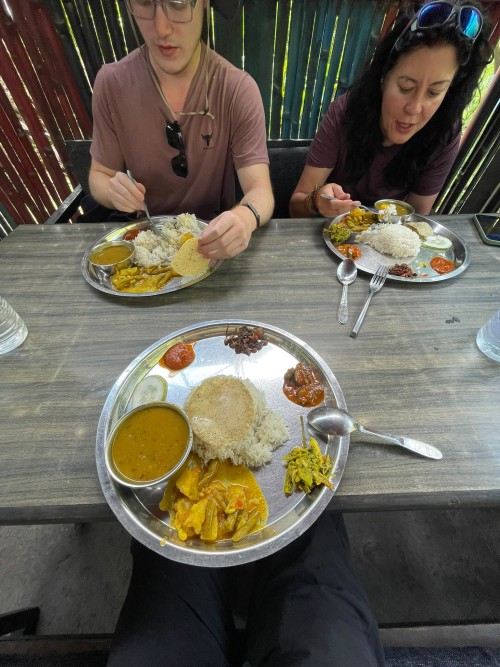
Local specialties include Gurung bread, dal bhat, and other traditional Nepalese and Himalayan meals. While the cooks are generally skilled and experienced, the flavors may differ from Western cuisine due to the remote mountain environment and the limited availability of ingredients.
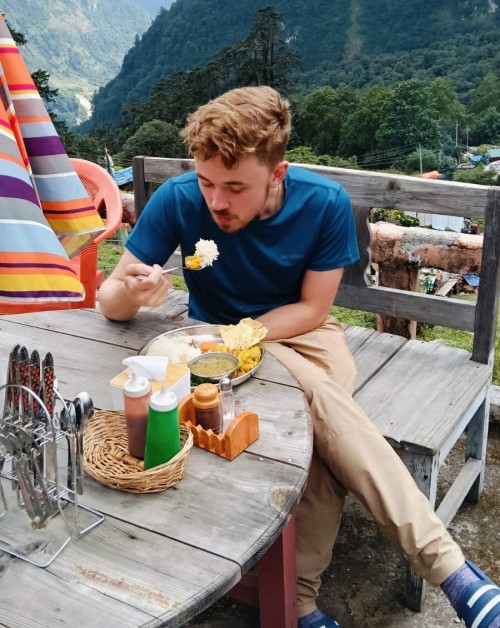
One of the most highly recommended meals is dal bhat, Nepal’s traditional staple dish, which consists of rice, lentil soup, vegetables, pickles, and papad. It is nutritious, filling, and often served with free refills, making it a popular choice among trekkers. Another recommended option is pizza, which is widely available along the Annapurna Base Camp Trek and is often served in generous portions, making it a satisfying meal after a long day of trekking.
In addition to local dishes, trekkers can enjoy a wide variety of food, including burgers, momos (dumplings), soups, potato dishes, fried rice, fried noodles, pasta, egg-based meals, pancakes, porridge, and other snacks. Hot beverages such as tea, coffee, hot chocolate, and lemon-ginger-honey tea are also widely available, helping trekkers stay warm and hydrated throughout the journey.
Overall, the food options along the Annapurna Base Camp Trek are surprisingly diverse and provide the energy needed for a comfortable and enjoyable trekking experience.
Is Vegetarian Food Available on the Annapurna Base Camp Trek?
Yes, vegetarian food is widely available throughout the Annapurna Base Camp Trek. If you follow a vegetarian or vegan diet, it is recommended to inform your guide or the teahouse staff in advance so they can coordinate meal preparations according to your dietary preferences.
A variety of vegetarian and vegan dishes are available along the route, including dal bhat, vegetable fried rice, noodles, soups, vegetable curries, and vegetable momos. These meals are nutritious, readily available, and well-suited to the energy needs of trekkers.
Is Drinking Water Provided to Trekkers Along the Annapurna Base Camp Trek?
Yes, drinking water is available to trekkers at teahouses along the Annapurna Base Camp Trek. The most common options include bottled water, boiled water, filtered water, and tap water. Bottled water is generally available up to Ghurjung Village (before Chhomrong), with prices ranging from approximately NPR 100 to NPR 300 per liter, depending on the location.
Above Ghurjung Village, the sale of bottled water is prohibited to help reduce plastic waste in the Annapurna Conservation Area. Instead, teahouses provide boiled and filtered drinking water, which typically costs between NPR 150 and NPR 300 per liter.
We recommend that trekkers carry a reusable water bottle to refill along the route. If you plan to use tap water, you should bring water purification tablets, purification drops, or a portable water filter. These provide a safe and convenient way to treat drinking water throughout the trek.
Boiled water is widely available at teahouses and is generally considered the safest and most reliable drinking water option along the Annapurna Base Camp Trek.
Are There Hot Showers Available on the Annapurna Base Camp Trek?
Yes, hot showers are available at most teahouses along the Annapurna Base Camp Trek for an additional fee. The cost typically ranges from NPR 200 to NPR 300 per shower, depending on the location and the teahouse. In most cases, hot water is provided through gas geysers.
At lower elevations, below Chhomrong, some teahouses offer rooms with attached bathrooms and hot showers, and the cost is often included in the room rate. Above Chhomrong, hot showers are generally available only in shared bathroom facilities and are charged separately.
As you gain altitude, the availability of hot water becomes more limited, and shower facilities may be less reliable. For this reason, we recommend that trekkers take advantage of hot showers at lower elevations, where facilities are more comfortable, water is more readily available, and costs are generally lower.
While hot showers are available throughout much of the trek, many trekkers choose to shower less frequently at higher elevations due to the colder temperatures and basic facilities.
Can I Charge My Electronic Devices in Lodges During the Annapurna Base Camp Trek?
Yes, you can charge your electronic devices at most teahouses and lodges along the Annapurna Base Camp Trek. In some locations, charging is free of charge, while in others there is an additional fee, typically ranging from NPR 200 to NPR 300 per device, depending on the location and the teahouse.
Most villages along the route are supplied with electricity from micro-hydropower systems, making charging facilities widely available. However, charging points are usually located in the communal dining hall rather than in individual rooms. During the peak trekking seasons, finding an available charging outlet can be challenging, as many trekkers need to charge their devices at the same time.
At Annapurna Base Camp, electricity is primarily generated by solar panels, so the power supply may be limited and less reliable than at lower elevations. For this reason, we strongly recommend bringing a power bank or a small solar charger to keep your electronic devices charged and to provide backup power throughout the trek.
Having a reliable backup power source is especially useful for charging phones, cameras, smartwatches, headlamps, and other essential electronic devices during the Annapurna Base Camp Trek.
Is Wi-Fi or Mobile Network Service Available on the Annapurna Base Camp Trek?
Yes, Wi-Fi is available at most teahouses along the Annapurna Base Camp Trek, usually for an additional fee. The cost typically ranges from NPR 100 to NPR 300 per night. However, internet connectivity can be slow or unreliable, especially during the busy trekking seasons, as many trekkers, guides, and porters use the same network at the same time. In most teahouses, Wi-Fi works best in the dining hall or in rooms located close to it.
Mobile phone coverage is also available along much of the Annapurna Base Camp trekking route, excluding Annapurna Base Camp. However, in some remote sections of the trail, the signal may become weaker and less reliable.
Trekkers can use mobile data (4G) by purchasing a local SIM card from providers such as Nepal Telecom before starting the trek in Kathmandu or Pokhara. A local SIM card is often the most convenient and cost-effective way to stay connected during the trek.
For the best connectivity, we recommend carrying a local SIM card and using teahouse Wi-Fi as a backup. Having access to both options will help you stay connected with family and friends and access important information throughout the Annapurna Base Camp Trek.
What Kinds of Toilets Are Available on the Annapurna Base Camp Trek?
Toilet facilities on the Annapurna Base Camp Trek are generally basic but adequate. At lower elevations, most teahouses provide Western-style toilets due to better water availability and more developed infrastructure. At higher elevations, squat toilets are more common because of colder temperatures and limited water supplies.
Some teahouses offer private toilets attached to rooms, while others have shared toilet facilities located outside the rooms for use by multiple trekkers.
As you gain altitude, facilities become more basic, and trekkers should be prepared for varying levels of comfort and hygiene. We highly recommend bringing your own toilet paper and hand sanitizer, as these items are often not provided by teahouses along the route.
Can I Buy Snacks and Cold Drinks During the Annapurna Base Camp Trek?
Yes, you can purchase a variety of snacks, cold drinks, and hot beverages during the Annapurna Base Camp Trek. Items such as chocolates, energy bars, soft drinks, bottled water, tea, coffee, and other refreshments are available at teahouses, small shops, and restaurants along the trekking route.
However, prices increase as you gain altitude because supplies must be transported to remote mountain areas. As a result, snacks and drinks are generally much more expensive than in Kathmandu, Pokhara, and other lower-altitude towns.
For this reason, it is a good idea to bring some of your favorite snacks and other essential items from Kathmandu or Pokhara before starting the trek. This can help you save money and ensure that you have familiar foods available throughout your journey to Annapurna Base Camp.
Annapurna Base Camp Trek Cost and Payment
How Much Does the Annapurna Base Camp Trek Cost?
The cost of the Annapurna Base Camp Trek is USD 770 per person for our 13-night, 14-day itinerary, which includes 3 nights in Kathmandu and 2 nights in Pokhara. This package price is based on a minimum of two participants or joining a group trek.
The price includes all essential logistics and services, such as trekking permits, accommodation, three meals per day during the trek, transportation as per the itinerary, and the services of an experienced guide and porter. However, personal expenses, travel insurance, trekking gear, and additional food and beverages are not included in the package.
Please note that the final cost may vary depending on the group size, travel season, trek duration, and any additional services or customizations requested for the Annapurna Base Camp Trek.
What Is the Booking and Payment Method for the Annapurna Base Camp Trek?
The booking and payment process for the Annapurna Base Camp Trek is simple and straightforward with High Pass Adventure. After selecting your preferred trip, you can complete the booking form and reserve your trekking date by submitting a copy of your passport and your flight details.
To confirm your booking, an advance deposit of 15% to 20% of the total trip cost is required via bank transfer. The remaining balance can be paid upon your arrival in Kathmandu before the trek begins.
Once we receive your completed booking form, passport copy, flight details, and deposit payment, your trek will be officially confirmed. We will then begin making all the necessary arrangements for your Annapurna Base Camp Trek.
What Are the Cancellation and Refund Policies for the Annapurna Base Camp Trek?
The cancellation and refund policy for the Annapurna Base Camp Trek is simple and clearly defined when you book your trek with High Pass Adventure. If you wish to cancel your trip after paying the 15% advance deposit, you must notify us by email as soon as possible.
Once we receive your cancellation request, we will begin the necessary cancellation procedures for services such as transportation, hotel bookings, and guide arrangements. The advance deposit is generally non-refundable, as it is used to secure and organize your trip arrangements.
Alternatively, you may choose to postpone your trek to a later date or transfer your booking to a friend or family member, subject to our booking conditions.
In cases where a refund is applicable, the processing time may take several weeks or a few months, depending on banking procedures and relevant government regulations in Nepal.
How Much Money Should I Carry for the Annapurna Base Camp Trek?
If you have already paid the full package cost, we recommend carrying approximately NPR 10,000 to NPR 15,000 (around USD 100 to USD 120) for personal expenses during the Annapurna Base Camp Trek. This amount can be used for optional expenses such as Wi-Fi, bottled water, mobile phone and camera charging, snacks, cold drinks, donations at monasteries, and hot showers at certain locations.
If you are trekking independently, you should budget approximately NPR 5,000 per day to cover accommodation, meals, and other daily expenses along the Annapurna Base Camp Trek route.
As there are no ATMs available on most sections of the trail, it is advisable to carry sufficient cash from Kathmandu or Pokhara before starting your trek.
Do I Need to Book the Annapurna Base Camp Trek in Advance?
Yes, it is highly recommended to book the Annapurna Base Camp Trek in advance. Booking ahead makes it easier to arrange all necessary services, including guides, porters, transportation, permits, and accommodation.
Advance booking also gives you the opportunity to join a group trek if you are traveling solo and would like to trek with other participants. In addition, it allows us to make proper preparations and ensure a smooth and well-organized trekking experience.
While last-minute bookings may be possible, reserving your trek in advance is the best way to secure your preferred departure date and travel arrangements.
Do I Need a Guide and Porter for the Annapurna Base Camp Trek?
A guide and porter are not mandatory for the Annapurna Base Camp Trek, especially for strong, physically fit, and experienced trekkers. However, hiring a guide and porter is highly recommended for added safety, convenience, and to support local employment opportunities in Nepal.
A guide can help manage logistics, provide navigation assistance, share insights into the local culture, history, and natural environment, and ensure a smoother and more enjoyable trekking experience. A porter can carry your trekking gear, allowing you to hike more comfortably and conserve energy throughout the trek.
Overall, hiring a guide and porter can make your Annapurna Base Camp Trek safer, easier, and more enjoyable.
Are Drone Cameras Allowed in the Annapurna Region?
Drone cameras are not permitted in the Annapurna region, including the Annapurna Base Camp Trek, without obtaining official permission from the Annapurna Conservation Area authorities and the Government of Nepal.
If trekkers wish to operate a drone in the Annapurna region, they must obtain the necessary permits from the Civil Aviation Authority of Nepal (CAAN), the Ministry of Home Affairs, and the relevant conservation authorities. However, the approval process can be lengthy, and the permit fees may be relatively expensive.
To avoid legal issues or penalties, trekkers are advised to secure all required permissions before bringing or operating a drone in the Annapurna region.
How Much Should I Tip My Guide and Porter After Completing the Annapurna Base Camp Trek?
A common guideline for tipping guides and porters on the Annapurna Base Camp Trek is to offer approximately 15% of the total trip cost to the guide and 10% to the porter. However, the amount is entirely at your discretion and may vary depending on the quality of service provided and your overall satisfaction.
Tipping is not mandatory, but it is a widely practiced way to show appreciation for the hard work, dedication, and support provided throughout the trek. Guides and porters greatly value tips as recognition of their efforts in helping you complete the journey safely, comfortably, and successfully.
Your guide and porter play an important role in your trekking experience, and tipping is a meaningful way to acknowledge their commitment and assistance. It also helps support their livelihoods and encourages them to continue providing excellent service to future trekkers.
Annapurna Base Camp Trek: Health, Safety, and Insurance
How Safe Is the Annapurna Base Camp Trek?
The Annapurna Base Camp Trek is generally very safe during the spring and autumn seasons when weather conditions are stable. If you book your trek with High Pass Adventure, we provide experienced trekking guides to ensure your safety throughout the journey.
At High Pass Adventure, we prioritize the safety and security of our clients by preparing the necessary trekking arrangements and guiding trekkers along safe and well-established routes. Our guides are highly experienced and familiar with the trekking trails, allowing them to respond effectively to any situation that may arise.
However, trekking alone is not recommended, especially during the monsoon (summer) and winter seasons. Heavy rainfall during the monsoon can make trails slippery and increase the risk of landslides, while heavy snowfall in winter may lead to blocked routes and avalanches.
High Pass Adventure is always ready to assist you in any emergency situation during the Annapurna Base Camp Trek, ensuring a safe and well-supported trekking experience.
Do I Need Travel Insurance for the Annapurna Base Camp Trek?
Yes, travel insurance is required for the Annapurna Base Camp Trek and is highly recommended for your safety and peace of mind. This trekking route passes through a remote region far from your home country, where medical facilities are limited and transportation to urban centers can take considerable time.
Your insurance policy should cover high-altitude trekking up to the maximum elevation of the trek, as well as emergency helicopter evacuation and medical treatment. Without proper coverage, the cost of emergency evacuation and healthcare can be extremely high if paid out of pocket.
Therefore, having comprehensive travel insurance is essential before starting the Annapurna Base Camp Trek.
What About Insurance for Guides and Porters on the ABC Trek?
Insurance for guides and porters on the Annapurna Base Camp Trek is essential for their safety and well-being. It is mandatory for all trekking staff in Nepal to have proper insurance coverage while working in the mountains.
At High Pass Adventure, all guides and porters are fully insured, including life insurance and coverage for trekking-related risks in Nepal.
Before starting the trek, you should ensure that your guide and porter are properly insured by the trekking company. This helps guarantee safety and protection for all staff throughout the Annapurna Base Camp Trek and allows you to trek with confidence.
What Are the Signs of Altitude Sickness and How Can It Be Avoided on the Annapurna Base Camp Trek?
High altitude sickness, also known as Acute Mountain Sickness (AMS), is a common concern when trekking to high elevations such as Annapurna Base Camp. Common symptoms include headache, nausea, dizziness, fatigue, loss of appetite, and difficulty sleeping.
If symptoms worsen, such as persistent vomiting, severe shortness of breath, confusion, or swelling, immediate medical attention should be sought.
Although altitude sickness cannot be completely prevented, the risk can be significantly reduced by following these guidelines:
- Follow a properly designed itinerary
- Drink plenty of water
- Ascend slowly and maintain your own pace
- Take regular rest and avoid overexertion
- Do not consume alcohol
- Eat regular meals rich in carbohydrates
- Follow the principle of “climb high, sleep low” whenever possible
- Monitor your pulse and oxygen levels daily
- Take medication such as Diamox (acetazolamide) only under medical advice
- Consult your guide daily and follow their instructions
Should I Bring Medicines for the Annapurna Base Camp Trek?
Yes, it is advisable to bring basic medicines for the Annapurna Base Camp Trek. You will be trekking in a foreign country, in remote and high-altitude regions where medical facilities are limited. Our guides carry basic first-aid supplies; however, in some cases, locally available medicines may not be suitable for all trekkers.
Recommended medicines include paracetamol, painkillers, ibuprofen, cold and flu tablets, nasal decongestants, antiseptic solution (such as Dettol), bandages, muscle pain relief spray, anti-diarrheal medication, and acetazolamide (Diamox), among others.
If you have any allergies or pre-existing medical conditions, it is important to consult a healthcare professional in your home country before the trek. They can advise you on appropriate medications based on your health condition and the altitude conditions of the trek.
Are you interested on any of your travel serveices?
Make Inquiry NowRecent From Blog
15th Jun, 2023
21st Feb, 2021
28th Feb, 2018
5th Sep, 2023

13th May, 2019
19th Feb, 2019
8th Feb, 2021
21st Jan, 2021
29th Jul, 2020
3rd May, 2019
30th Apr, 2020

3rd Apr, 2020
17th Jul, 2020
26th Mar, 2020
31st Mar, 2020
19th Jun, 2023
11th Feb, 2020
11th Mar, 2020
27th Sep, 2019
17th May, 2019
26th Jul, 2020
6th May, 2019
5th Mar, 2019
7th Mar, 2020
18th Feb, 2019
12th Sep, 2019

27th Mar, 2018
27th Mar, 2019
2nd Mar, 2019
16th Jan, 2019

1st Jul, 2023
5th Jul, 2023

5th Jul, 2023

5th Jul, 2023

5th Jul, 2023
5th Dec, 2019
6th Jan, 2019
28th Feb, 2018
9th Dec, 2018
11th Dec, 2018

5th Oct, 2023

3rd Jan, 2024
.jpg)
27th Jan, 2024
29th Jan, 2024
19th Jan, 2025

7th Feb, 2025

17th Feb, 2025
9th Mar, 2025

15th Mar, 2025

18th Mar, 2025

23rd Mar, 2025

25th Mar, 2025

26th Mar, 2025

24th Apr, 2025

21st May, 2025

21st May, 2025

22nd Jun, 2025

22nd Jun, 2025
4th Jul, 2025

14th Jul, 2025

14th Sep, 2025
26th Sep, 2025
20th Dec, 2025
28th Jan, 2026
17th May, 2026
18th May, 2026
2nd Jun, 2026
7th Jun, 2026
9th Jun, 2026
13th Jun, 2026
14th Jun, 2026
2nd Jul, 2026
7th Jul, 2026
16th Jul, 2026